 ROC # 363755
  (480) 452-9023
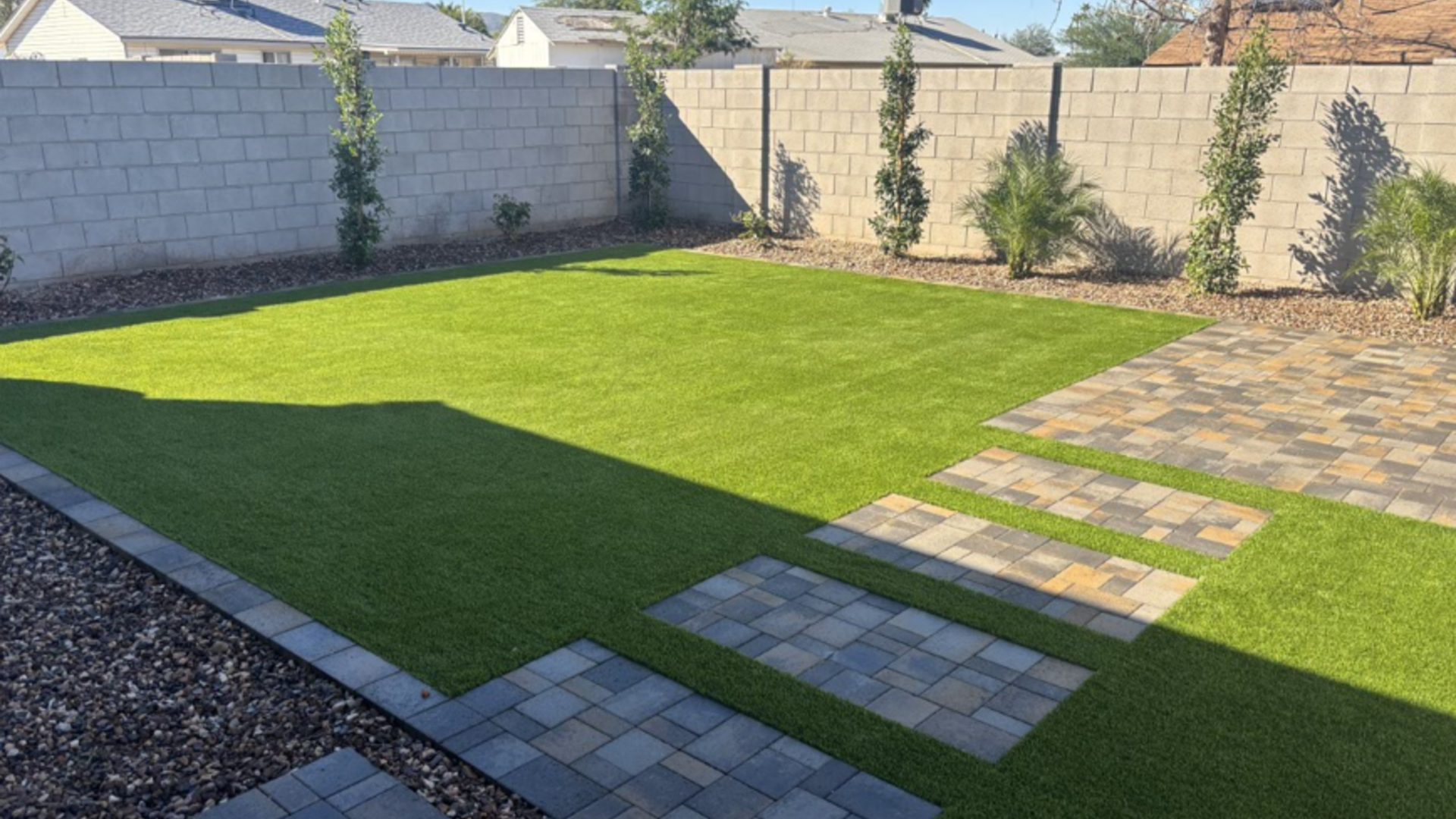
Artificial Turf vs. Real Grass: Comprehensive Cost and Maintenance Comparison
Stop Watering, Mowing, and Reseeding Your Lawn
Initial Investment
Real grass appears budget-friendly at first, costing around $0.15 to $0.40 per square foot for sod installation in the Phoenix metropolitan area. A typical 1,000-square-foot lawn runs between $150 and $400 upfront. Seeding costs even less but demands weeks of constant watering and care before you see results.
Artificial turf requires a bigger commitment upfront, typically $5 to $20 per square foot installed, depending on quality, infill type, and site preparation. That same 1,000-square-foot yard costs $5,000 to $20,000. The price varies based on drainage needs, backing materials, and UV-resistant fibers that withstand Valley heat. Quality matters here; cheaper products fade and flatten within a few years, while premium turf can last 15 to 20 years with proper installation.
In Peoria and across the West Valley, site preparation drives much of the cost difference. Arizona’s notorious caliche soil layer requires excavation and grading before any turf goes down, adding $1 to $3 per square foot to the project. Proper grading for monsoon drainage is non-negotiable; without it, summer storms can pool water and damage turf backing or create muddy washouts in sod lawns. Budget turf products often skip critical steps like weed barrier installation, compacted base layers, or quality infill materials, leading to premature failure and costly replacements within five years.
Premium artificial turf systems include UV-stabilized fibers rated for Arizona’s intense sun exposure, antimicrobial infill for pet areas, and perforated backing that drains up to 30 inches of water per hour during monsoon downpours. These features add $2 to $5 per square foot but extend lifespan from 8 to 10 years for budget products up to 20 years for professional-grade installations. When you work with our artificial turf installation service, site-specific factors like sun exposure, drainage patterns, and intended use determine the right product and prep work for your yard.
Timeline matters too. Real grass sod can be laid in a day, but it needs four to six weeks of daily watering and limited use before it establishes roots. Artificial turf installation in Peoria typically takes two to four days for a standard residential yard, including excavation, base prep, turf placement, and infill distribution. You can use the lawn immediately after installation, with no waiting period or establishment phase. For families eager to reclaim their outdoor space during Arizona’s mild fall and winter months, that instant usability adds real value.
Ongoing Water Costs
In Peoria and across the West Valley, water is your biggest recurring expense with real grass. A typical Arizona lawn needs 1 to 2 inches of water per week during summer, translating to roughly 60,000 to 90,000 gallons per year for a 1,000-square-foot lawn. At current Phoenix-area water rates, that’s $300 to $600 annually just to keep grass alive through June, July, and August when temperatures regularly exceed 110 degrees.
Artificial turf eliminates nearly all watering. You might rinse it occasionally to remove dust or pet waste, but annual water use drops to a few hundred gallons at most. Over a 15-year lifespan, the water savings alone can reach $4,500 to $9,000, a figure that climbs as drought surcharges and conservation mandates push rates higher. In neighborhoods like Vistancia and Westwing Mountain, where HOAs encourage xeriscape and water-smart landscaping, this difference becomes even more compelling.
Valley irrigation schedules reflect the brutal reality of desert summers. Real grass typically demands watering three to five times per week from May through September, timed for early morning to minimize evaporation losses that can exceed 50 percent during peak heat. Evapotranspiration rates in the Phoenix area reach 0.3 to 0.4 inches per day in July, forcing homeowners to run sprinklers 20 to 30 minutes per zone multiple times weekly. East Valley water districts like Chandler and Mesa have implemented tiered pricing that penalizes high summer use, while West Valley providers in Peoria and Glendale add seasonal surcharges during peak demand months.
Monsoon season from mid-June through September complicates watering further. Afternoon storms deliver localized downpours that can drop an inch of rain in 20 minutes, but coverage is patchy; your neighbor’s yard might flood while yours stays bone-dry. Adjusting irrigation schedules after each storm to avoid overwatering requires constant attention, and most homeowners either overcompensate or let grass go dry between unpredictable rain events. Artificial turf sidesteps this guesswork entirely, maintaining consistent appearance regardless of rainfall patterns. Homeowners exploring water-smart alternatives often pair turf installations with desert landscaping solutions that blend native plants, rock features, and synthetic lawns for maximum conservation and curb appeal.
Maintenance Time and Labor
Real grass demands regular attention. Weekly mowing, edging, fertilizing every six to eight weeks, aerating twice a year, and overseeding bare patches add up to 50 to 100 hours of labor annually for a typical yard. If you hire a landscaping service, expect to pay $100 to $200 per month year-round. Monsoon season brings additional challenges; heavy rains can wash out seed, and intense heat stresses turf, requiring more frequent watering and repair.
Artificial turf cuts maintenance to near zero. Occasional brushing to lift fibers, rinsing for pet areas, and removing debris takes maybe 10 hours per year. No mowing, no fertilizer, no re-seeding. Homeowners in Pleasant Valley and Highland Grove who switched to turf report reclaiming entire weekends previously spent on yard work. The time savings alone can justify the upfront cost, especially for busy families or retirees who’d rather enjoy their outdoor space than maintain it.
Phoenix-area lawns face unique seasonal stress cycles. Bermuda grass, the most heat-tolerant variety, goes dormant and brown from November through March, prompting many homeowners to overseed with ryegrass for winter color. This transition requires dethatching, overseeding at the right temperature window in October, and carefully managing the spring transition back to bermuda without killing either grass type. Miss the timing by two weeks and you end up with patchy, weedy growth that takes months to correct.
Heat stress above 105 degrees shows up as wilting, browning tips, and slowed growth even with adequate water. Bermuda can survive but struggles to repair damage from foot traffic or pet use during peak summer. Ryegrass fails entirely above 90 degrees, making spring and fall transitions narrow windows of opportunity. Desert pests like grubs, chinch bugs, and billbugs thrive in stressed turf, requiring targeted treatments that add cost and complexity. Thatch buildup in Arizona’s alkaline soil creates a dense mat that blocks water and air, demanding annual or biannual dethatching that disrupts the lawn for weeks.
Families who switch to artificial turf often redirect their reclaimed time and budget into other outdoor improvements. With no mowing or watering duties, homeowners invest in patio expansions, outdoor kitchens, or decorative hardscaping that extends usable living space. Our landscape design and hardscaping services help clients reimagine their yards as true outdoor retreats rather than high-maintenance obligations, blending turf with pavers, seating areas, and shade structures that perform beautifully in Arizona’s climate.
Fertilizer and Treatment Costs
Keeping real grass green in the Valley requires ongoing chemical inputs. Fertilizer runs $100 to $300 per year for a modest lawn, plus another $50 to $150 for weed control, pest treatments, and fungicides. Desert soils are alkaline and nutrient-poor, so grass often needs soil amendments and pH adjustments to survive. Add in occasional grub control and pre-emergent herbicides, and annual chemical costs can easily hit $400 or more.
Artificial turf needs none of this. No fertilizer, no pesticides, no soil conditioning. The only recurring expense is an occasional turf-safe disinfectant if you have pets, typically under $50 per year. Over 15 years, you save $1,500 to $6,000 in chemical treatments alone. For families with kids and pets who play on the lawn, eliminating chemical exposure is a bonus that goes beyond dollars.
Bermuda grass demands high-nitrogen fertilizer applications every six to eight weeks during the growing season to maintain color and density in Arizona heat. Slow-release formulations help avoid burn in desert conditions but cost more upfront. Overseeded ryegrass requires a different nutrient balance, with higher phosphorus to support root establishment in fall and early spring. Switching between fertilizer types twice a year adds logistical complexity and expense that many homeowners underestimate when they commit to year-round green lawns.
Pre-emergent herbicides must go down in February and September to block Arizona’s two annual weed cycles, timed precisely to soil temperature thresholds. Miss the window and crabgrass, spurge, and goatweed explode across your lawn, requiring multiple post-emergent treatments that stress turf and rarely achieve full control. Monsoon humidity from July through September creates ideal conditions for fungal diseases like brown patch and pythium blight, especially in overwatered or poorly drained areas. Fungicide applications run $75 to $150 per treatment and often require multiple rounds to stop outbreaks.
Soil amendments are a hidden recurring cost in the Valley. Arizona’s caliche and alkaline pH above 8.0 bind up nutrients, making them unavailable to grass roots even after fertilization. Sulfur applications to lower pH, gypsum to improve soil structure, and periodic topdressing with organic compost add $100 to $300 per year for proactive homeowners. Without these inputs, grass thins, yellows, and becomes more susceptible to pests and disease, creating a cycle of declining performance and rising chemical use.
Families concerned about chemical exposure increasingly turn to pet-friendly artificial turf options that eliminate pesticide, herbicide, and fertilizer contact entirely. Modern turf systems use antimicrobial infill and non-toxic materials that stay cool underfoot and rinse clean with plain water, offering a safer play surface for children and pets without sacrificing durability or appearance.
Long-Term Durability
Real grass in Arizona struggles with longevity. Summer heat stress, monsoon washouts, and winter dormancy cycles wear turf down. Even with diligent care, you’ll likely need to re-sod or overseed bare patches every few years, adding $200 to $800 per incident. Irrigation systems break, sprinkler heads clog, and pipes crack, bringing repair bills that range from $100 for a single head replacement to $1,500 for valve or line work.
Quality artificial turf lasts 15 to 20 years when installed correctly with proper drainage, UV-resistant backing, and heat-tolerant infill. Inferior products fade, flatten, or delaminate within five years, which is why installation quality matters as much as the product itself. In Peoria’s intense sun, choosing turf with a high UV rating and working with a turf installation service that understands desert conditions ensures you get the full lifespan. Friendly Neighborhood Turf Guys installs drainage and backing systems designed for monsoon rains and extreme heat, preventing the premature failures common with rushed or budget installations.
Choosing between artificial turf and real grass ultimately comes down to your priorities, lifestyle, and how you use your outdoor space. Real grass can make sense in small, shaded areas where water use stays manageable, or for homeowners on tight budgets who have the time and willingness to invest 50 to 100 hours per year in maintenance. If you enjoy the ritual of weekend yard work, have access to inexpensive water, and don’t mind seasonal browning or overseeding cycles, natural grass remains a viable option.
Artificial turf is the smarter investment for most Valley homeowners, especially those with full-sun yards, water scarcity concerns, busy schedules, or active families and pets. The upfront cost is higher, but eliminating recurring expenses for water, chemicals, mowing, and repairs delivers predictable long-term savings and reclaims countless hours. Homeowners in Corte Bella, Zanjero Trails, and other West Valley communities consistently report that turf installations pay for themselves within seven to ten years through water savings alone, while delivering a consistently beautiful yard that performs flawlessly through 115-degree summers and monsoon storms.
Not all turf installations are equal. Proper site preparation, quality materials, and experienced installation make the difference between a lawn that lasts five years and one that performs beautifully for two decades. Drainage design for Arizona’s intense but brief monsoon downpours, UV-stabilized fibers that resist fading in relentless sun, and infill choices that stay cool and drain fast all matter. Cutting corners on any of these elements leads to premature failure, costly repairs, and disappointment.
If you’re ready to explore whether artificial turf is right for your home, we invite you to request a free consultation. Our team evaluates your yard’s specific conditions, sun exposure, drainage patterns, and intended use to recommend the best turf system and installation approach for your needs and budget. Whether you’re looking to eliminate water bills, reclaim your weekends, or create a pet-friendly play area that stays green year-round, we’ll walk you through every option and answer all your questions. Visit our contact page to schedule your consultation, or explore our artificial turf installation service to see examples of completed projects across Peoria and the Phoenix metropolitan area.